Every enterprise conversation about AI eventually arrives at the same question, usually from someone in security, usually about ten minutes in. “Where does our data go?” The honest answer most vendors give is some version of “trust us.” That answer does not survive contact with a procurement review, and it should not.
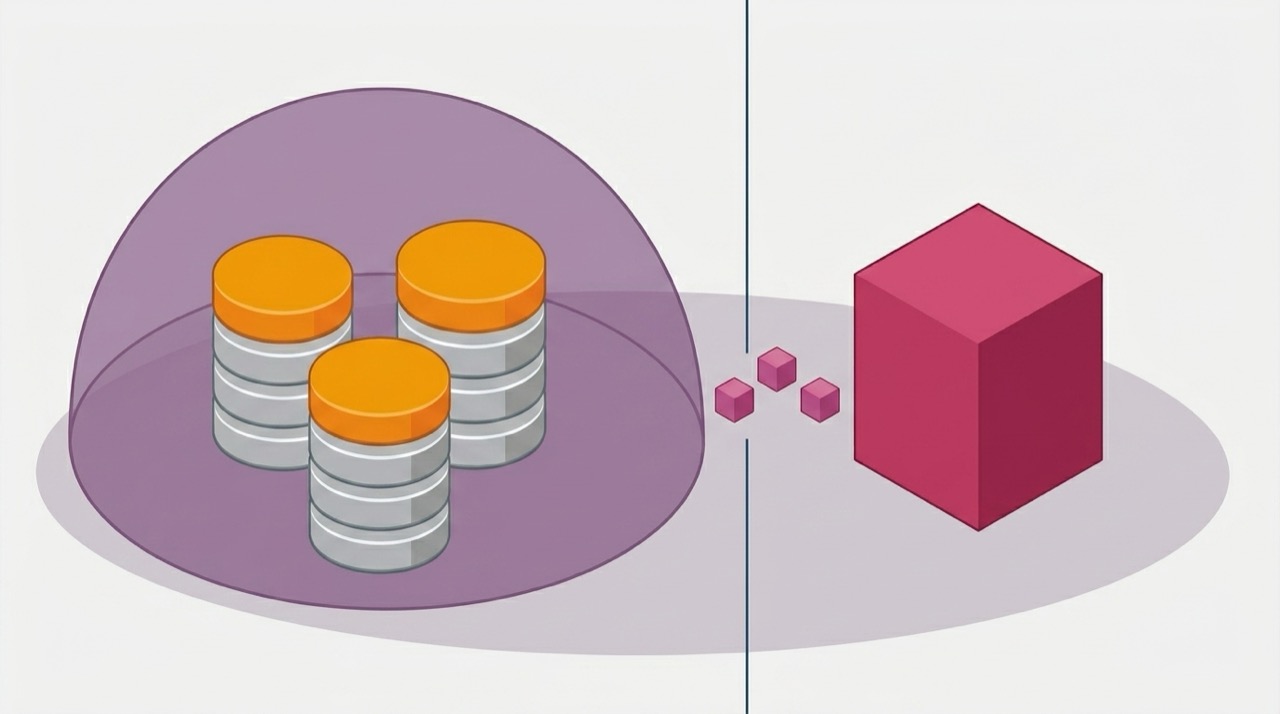
So our newest release is built around a simpler promise: your raw data does not go to the model at all.
Reasoning is not the same as access
The mistake people make is assuming that for AI to be useful on your data, the AI has to see your data. It does not. The model’s job is to reason about intent, the structure of a system, the shape of a transformation, the logic of a mapping. That reasoning runs on abstracted context, not on customer records.
The records stay inside the platform. Only the abstract context a model needs to plan the work ever crosses the boundary, and the deterministic engine does the actual work on your data where it lives.
What the release adds
This release hardens that boundary end to end.
- A zero data retention mode across the platform, so prompts and context are not retained.
- The option to run reasoning through your own cloud’s model service rather than ours.
- Bring-your-own-key, so the model provider relationship is yours, on your terms.
None of this is a setting you have to discover. It is the default posture, because the default posture is the thing security teams are actually asking about.
The point
I did not want to build a product that asks customers to accept a risk. I wanted to build one where the risk is not there to accept. You should be able to put AI to work on the data that runs your business without that work becoming someone else’s training set.
That is the whole idea, and this release is the clearest expression of it so far. The full architecture is on the security page.